Wednesday, June 9, 2010

baroque & rococo


http://lh3.ggpht.com/_ujJJj45uVgk/SoAGmTClJPI/AAAAAAAAAP4/mfXRV0P-c-4/DSC01996.JPG

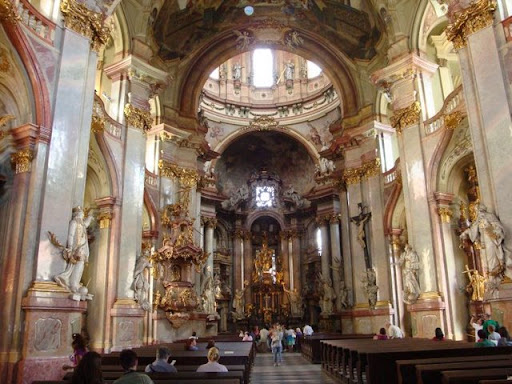
Sankt Nikolaus on the Kleinseite, Christoph Dientzenhoper, Prague, 1703-11

http://picasaweb.google.com/lh/photo/Fi5mN8MkHn5O6jX2GUFgtQ


http://www.earthdocumentary.com/london/st_martin_in_the_fields-02.jpg

St Martin-in-the-fields, James Gibbs, London, 1721-26

http://www.earthdocumentary.com/st-martin-in-the-fields-church_london.htm


http://www.espressolovecoffee.com/images/Die%20Wies.jpg

http://www.espressolovecoffee.com/soupvacation.html

Die Wies, Zimmermann, Bavaria, Germany, 1745-54

boroque & rococo rely on curves to create a feeling of movement, it is a very dramatic and ornamental movement. in the first image and second images you can see that there are limited windows . in the first image most of the light is from an opening in the dome. the second image relies on light from a large window located behind the altar. in both images you can see the large amount of decoration and ornaments. the difference between rococo and baroque are hard to define. the main difference is rococo has a softer feel about with more light and more decorations in some instances hiding the structure completely.

i like how they use light drastically and the illusion of depth they use from perspective. i also find the decorations overpower and annoying!

renaissance


The Chateau Chambord, Domenico da cortona, France, 1519-47

http://gina.dunjay.com/?p=340


The Banqueting House, Whitehall, London, 1619-22

http://www.virtual-london.com/sightseeing/london-landmarks/banqueting-house-the.html


http://farm3.static.flickr.com/2607/3671857562_a55a19c783.jpg

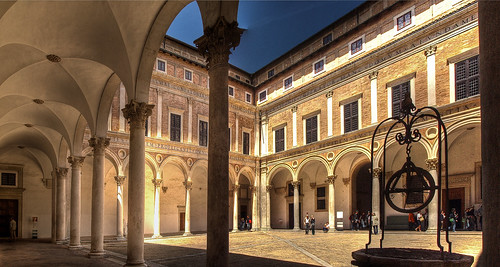
The Ducal Palace Courtyard, Duke of Urbino, Urbino, 1468

http://farm3.static.flickr.com/2607/3671857562_a55a19c783.jpg


The Chateau Chambord instead of having one large roof consists of many smaller roofs decorated with dormer windows. The banqueting houses facade shows the symmetry found in English renaissance buildings. also note the smaller windows on the first floor while the higher floors have larger windows, this is for security reasons. The Ducal palace has a large courtyard area used for entertaining.

The renaissance doesnt seem like a new movement just alot of different movements mashed together.

Gothic

http://www.witiger.com/centennialcollege/GNED117/notredame2.jpg
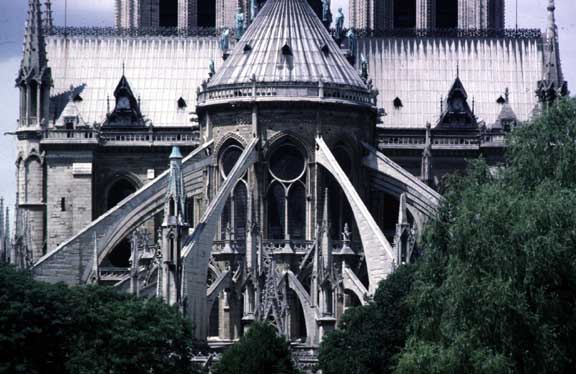
Notre Dame Cathedral, Paris, begun 1163
http://witiger.com/centennialcollege/GNED117/outline117b.htm

http://upload.wikimedia.org/wikipedia/commons/8/83/Chartres_Cathedral_020_south_facade_TTaylor.JPG

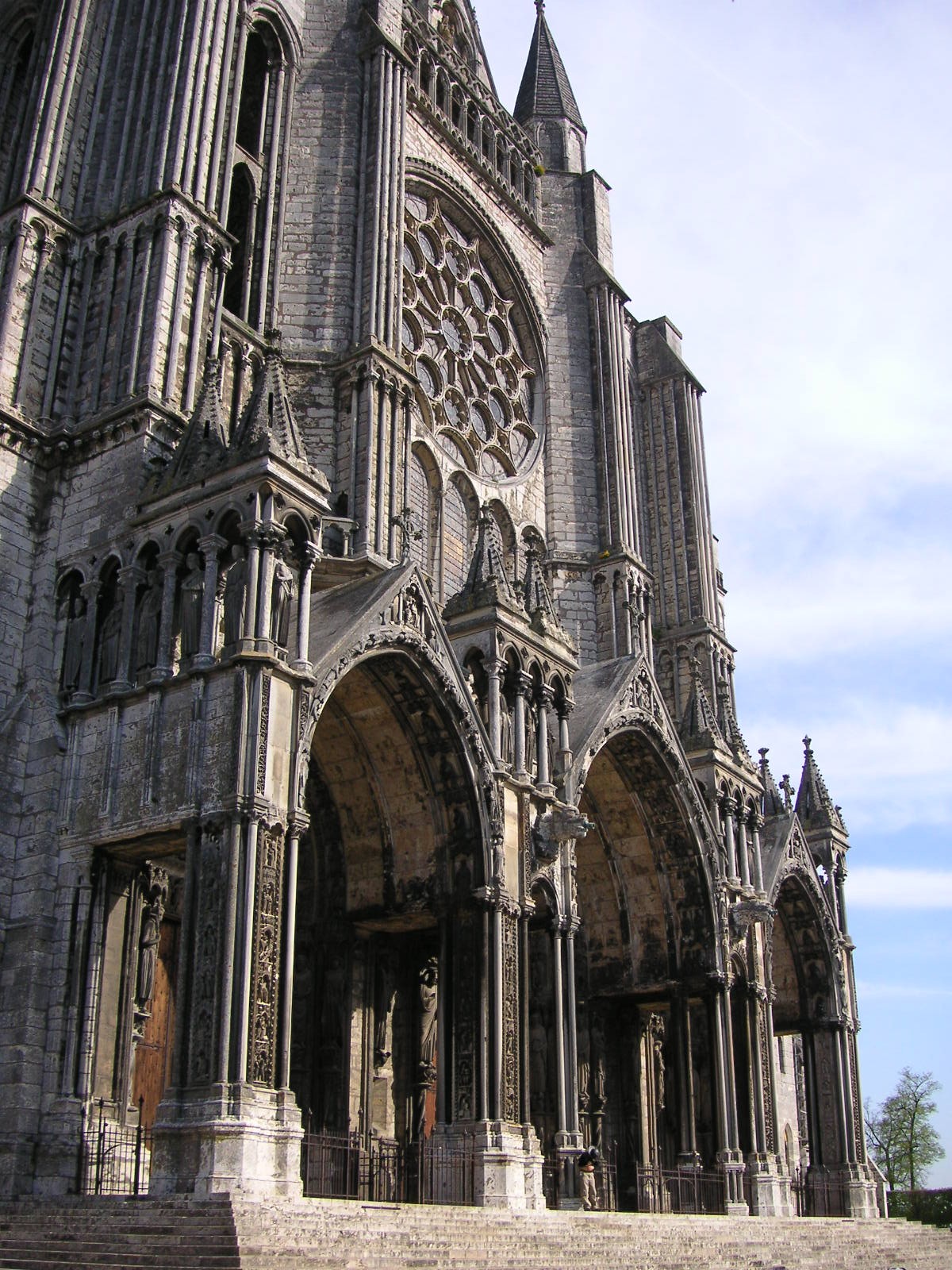
Chartres Cathedral, France, begun 1194 and roofed by 1220

http://commons.wikimedia.org/wiki/file:chartres_catherdral_020_south_facade_TTaylor.jpg

http://www.bouletfermat.com/backgrounds/wells_cathedral_front_zoom1_1024x768.jpg

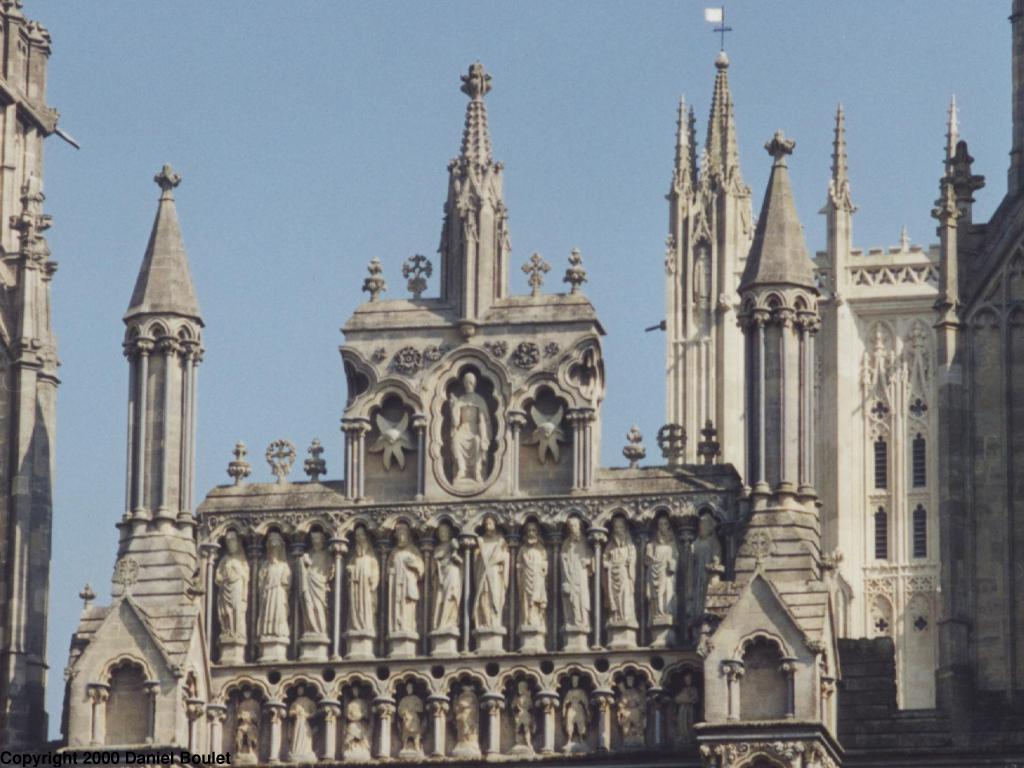
Wells Cathedal, England

http://wells_cathedral.pictures-images.com/well_cathedral_front_.html

In the photo of the Notre Dame cathedral you can clearly see flying buttresses extending from the building, these would help support outward pressure. you can also see the windows arnt completely round but have a slight point. the front facade of the Chartres cathedral shows features that are distinctly gothic, there are three large pointed arches covering the doors the middle one leads to the central nave. above the doors is a large extravagant window with stone work incorporated these were called rose windows. the last picture shows the amount of biblical decorations which was also a main feature in gothic architecture.

i dont really enjoy gothic architecture, i find it to 'sharp' and a little bit scary. parts that i do enjoy are the stained glass and rose windows.

Romanesque

Tympana in Narthex
Sainte Madeleine, Vezelay in Burgundy, C. 1089 and 1206

http://www.sacred-destinations.com/france/vezelay-church

http://www.shafe.co.uk/crystal/images/lshafe/Durham_Cathedral_interior.jpg
Cathedral of Durham, 1093

http://www.shafe.co.uk/art/durham_cathedral.asp

http://www.skyscrapernews.com/images/pics/392ElyCathedral_pic1.jpg

Ely Cathedral, begun c. 1090


http://www.skyscrapernews.com/picturedisplay.php?ref=392&idi=ely=cathedral&self=nse&selfifi=392elycathedral_pic1.jpg&no=1


Sainte Madeleine church shows the archways over doors and the receding columns leading to them, which also shows just how thick the walls had to be to support these massive stone structures. The cathedral of Durham shows the rediscovery of vaulting, in this picture you can see the ribbed vaults in the ceiling, these were made from stone putting a much larger weight on the structure hence the reason for such thick walls. Ely cathedral shows a large rectangular tower at the west entrance with smaller circular and octaganle towers at various points around the cathedral. you can also see buttresses on the side of the building which add additional support and help disperse the weight.


Byzantine Architecture

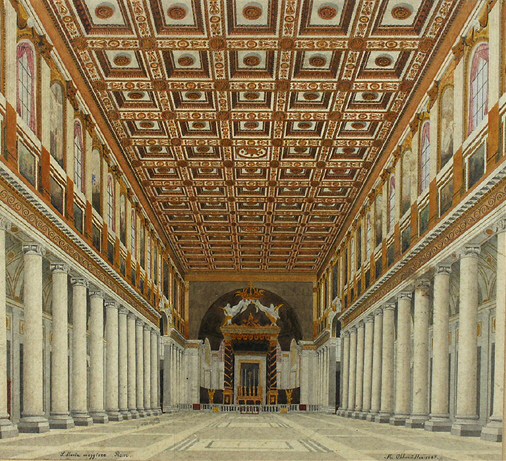
http://upload.wikimedia.org/wikipedia/commons/e/e5/Santa_Maria_Maggiore_Roma_interior_1883.jpg

Santa Maria Maggiore, Rome, 432 - 40 AD

Http://upload.wikimedia.org/wikipedia/commons/e/e5/Santa_maria_maggiore_roma_interior_1883.jpg

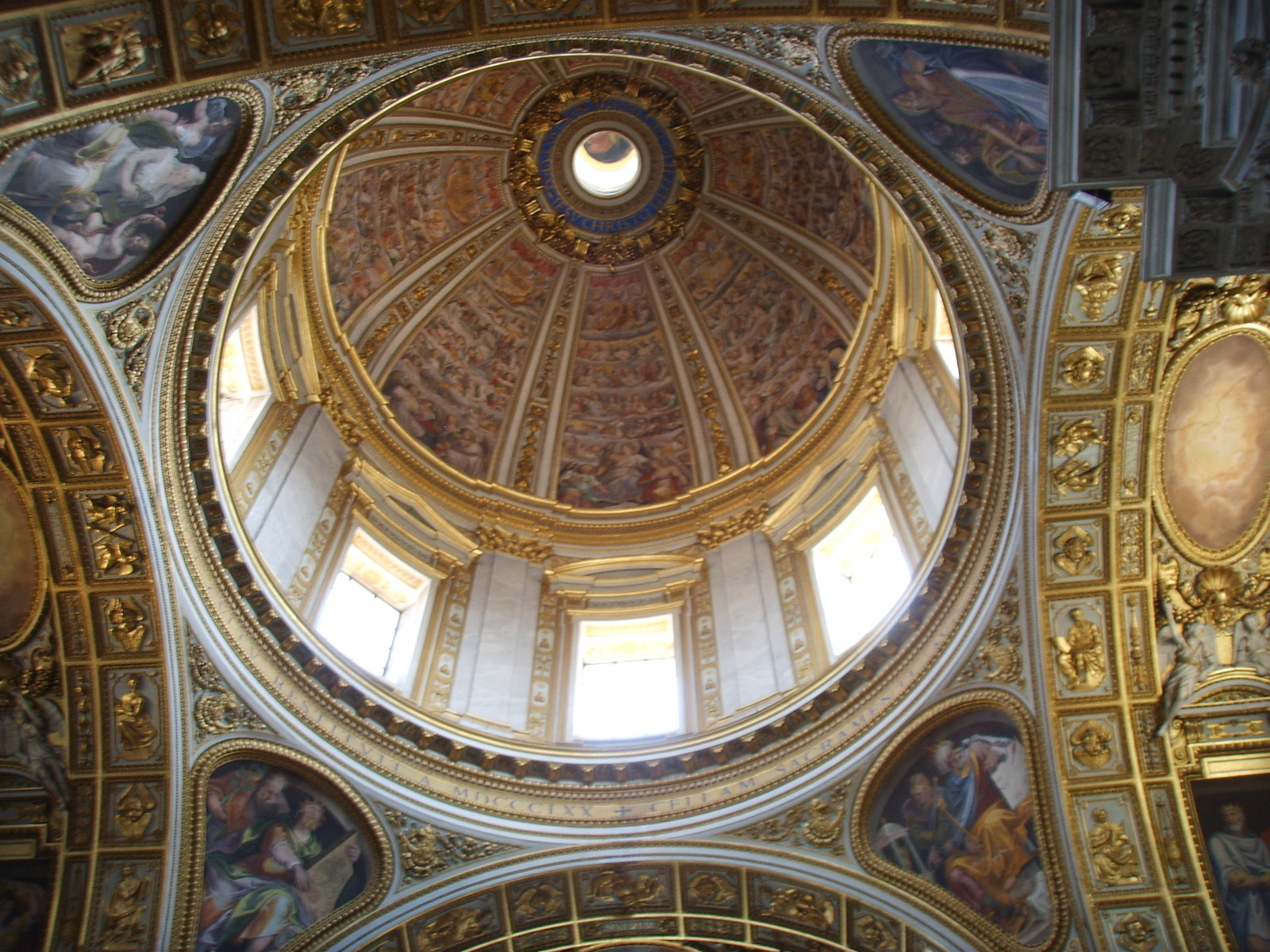
http://upload.wikimedia.org/wikipedia/commons/d/d8/Santa_Maria_Maggiore,_cappella_sistina_cupola.JPG

Sta. Maria Maggiore, Roman, 432 AD

Http://upload.wikimedia.org/wikipedia/commons/d/d8/Santa_Maria_maggiore,_cappella_sistina_cupola.JPG

http://frit.lss.wisc.edu/gallery2/main.php?g2_view=core.DownloadItem&g2_itemId=332&g2_serialNumber=6

Sant' Applollinare, Classe, Ravenna, Italy, 534 - 549


http://frit.lss.wisc.edu/gallery2/main.php?g2_view=core.downloaditem&g2_itemid=332&g2_serialnumber=6


Santa Maria Maggiore shows many stylistic features of a byzantine church, it has a large coffered ceiling (indented panels that are decorated) long uninterrupted nave, rounded arch windows and flat space beneath them for mosaics or decorations. this type of plan is called a Basilica. the second image (also Santa Maria Maggiore) shows the blue and gold ornamentation the is found in a lot of byzantine churches. The last image is the exterior view of Santa Applollinare, you can notice how the emphasis is more on the interior and the only stand out feature is the portico at the front of the church, this was used by people who weren't aloud to enter the church because of their sins.

I am defiantly not a fan of coffered ceilings, i feel they are to distracting and over the top! with the santa maria maggiore church i really enjoy how the simplistic walls create a vista leading you to the altar. i also dislike the exterior, i much prefer buildings that are inviting, intriguing or even interesting to look at.